


Cao County Huifengyuan Wooden Co., Ltd. is one of the leading manufacturers and suppliers of poplar furniture panels in China. With a professional production team, we are able to meet the needs of the majority of our customers. We warmly welcome you to wholesale premium wooden coffins and coffin accessories from our factory. Customized orders are welcome.
Product Description
Poplar furniture panels are widely used structural and decorative materials in furniture manufacturing, made from wood of the poplar tree (primarily species like Populus deltoides or Populus tremula). Valued for their cost-effectiveness, workability, and eco-friendliness, these panels balance practical performance with affordability, making them a staple for both mass-produced and custom furniture. Below is a detailed breakdown of their material properties, common types, core characteristics, manufacturing processes, application scenarios, and usage considerations.
Basic Material Properties of Poplar Wood
Before exploring the panels, it is critical to understand the inherent traits of poplar wood, which directly shape the performance of the finished panels:
Hardness & Density
Poplar is a soft hardwood (density: 300–500 kg/m³), significantly lighter and less dense than hardwoods like oak or maple. It is not overly rigid, which gives it good flexibility but limits its load-bearing capacity for heavy-duty uses.
Grain & Texture
Poplar has a straight, uniform grain with a fine, smooth texture. It lacks prominent knots (especially in plantation-grown poplar) and has minimal natural defects, making it easy to sand, cut, and finish.
Color
The heartwood (inner wood) is pale yellowish-brown to light tan, while the sapwood (outer wood) is nearly white. This light, neutral tone serves as an excellent base for painting, staining, or veneering (it does not overpower decorative finishes).
Moisture Resistance
Natural poplar has moderate moisture resistance-better than softwoods like pine but inferior to hardwoods like teak. It is prone to swelling or warping if exposed to prolonged dampness, so panels often require additional treatments for humid environments.
Sustainability
Poplar is a fast-growing tree (matures in 10–15 years) with high yield, making it a renewable resource. Most poplar used for panels comes from managed plantations, aligning with eco-friendly furniture production trends.
Common Types of Poplar Furniture Panels
Poplar furniture panels are not a single product but a category of engineered or solid wood panels tailored to different furniture needs. The most common types include:
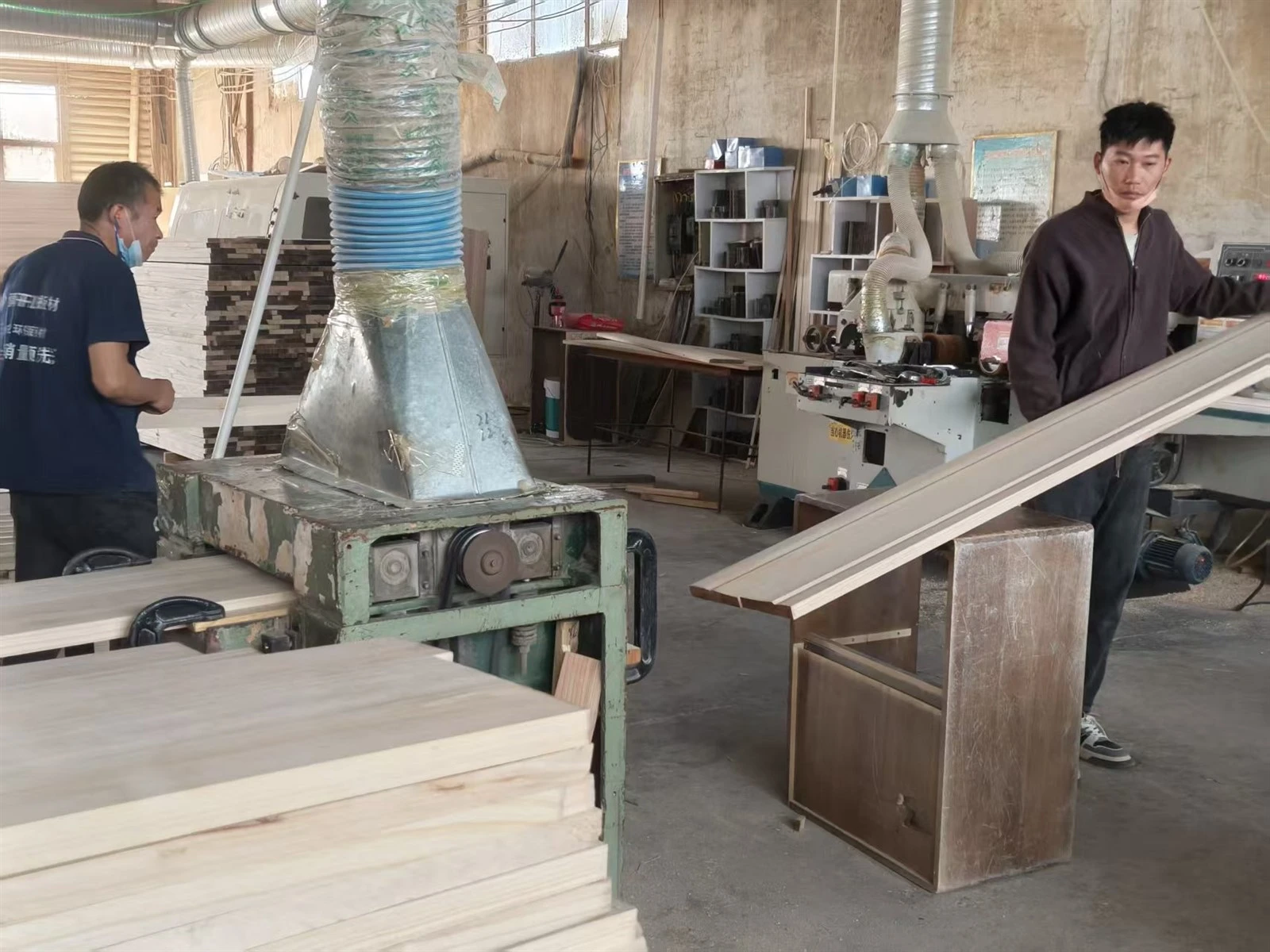
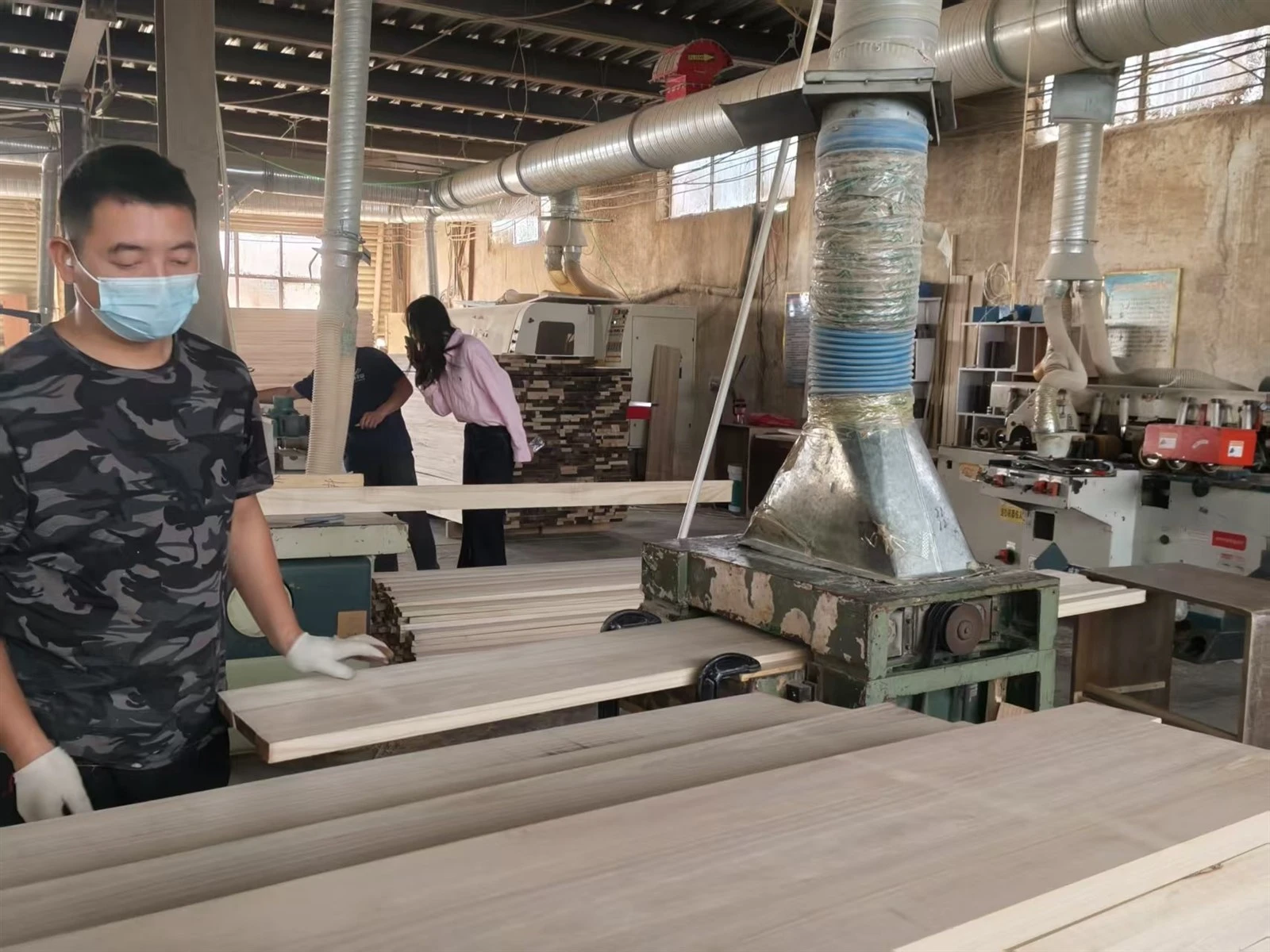
Solid Poplar Panels
Made from single or glued-together solid poplar boards, these panels retain the natural look and feel of wood.
Structure: Typically 10–50mm thick, with boards joined edge-to-edge using tongue-and-groove (T&G) or butt joints (reinforced with adhesives to prevent splitting).
Key Use Cases: Tabletops, cabinet doors, drawer fronts, and decorative accents (where natural wood grain is desired).
Pros: Authentic wood appearance; can be sanded and refinished multiple times.
Cons: Prone to dimensional changes (warping/cracking) in extreme temperature/humidity; higher cost than engineered panels.
Poplar Plywood (Engineered Panel)
A layered panel made by gluing thin poplar veneers (0.8–2mm thick) together at right angles to each other (cross-grain lamination).
Structure: Consists of 3–11 layers (odd numbers, for balance), with a core of poplar veneers and face/back veneers (may be poplar or higher-grade wood like oak for aesthetics).
Key Use Cases: Cabinet boxes, furniture frames, shelving, and hidden structural parts (e.g., drawer sides).
Pros: Excellent dimensional stability (cross-grain lamination reduces warping); higher strength-to-weight ratio than solid panels; cost-effective.
Cons: Veneer edges may chip if not sealed; face veneer can be thin (not suitable for heavy sanding).

Poplar Medium-Density Fiberboard (MDF)
An engineered panel made by breaking down poplar wood into fibers, mixing with resin (usually urea-formaldehyde or formaldehyde-free adhesives), and pressing into dense, uniform sheets.
Structure: Homogeneous throughout (no grain pattern), with thickness ranging from 3–30mm. Surface is smooth and porous, ideal for finishing.
Key Use Cases: Furniture with intricate designs (e.g., carved cabinet doors, curved edges), painted furniture, and laminate-backed pieces (e.g., kitchen countertops).
Pros: Perfectly flat surface (no knots or grain irregularities); easy to machine (drill, route, carve); low cost.
Cons: Poor moisture resistance (swells when wet); heavy (density: 600–800 kg/m³); less strong than plywood for structural uses.
Poplar Particleboard (Low-Density Engineered Panel)
Made by pressing poplar wood chips, shavings, or sawdust with resin into panels. It is the most economical poplar-based panel.
Structure: Coarser texture than MDF, with visible wood particles. Thickness typically 12–25mm; often has a melamine or PVC overlay for protection.
Key Use Cases: Budget furniture (e.g., bookcases, TV stands), cabinet bottoms, and temporary storage units.
Pros: Extremely low cost; lightweight compared to MDF.

FAQ
Q1. Are you a real manufacturer or a trading company?
We are the manufacturer. Our production base is in Cao County, Shandong - widely recognised as China's wooden funeral-products cluster - with its own sawmill, drying kiln, joinery line, spray booth and packing workshop. Trading companies source from us; you buy directly.
Q2. What is your minimum order quantity (MOQ)?
For a first trial order, one 40GP container (typically 140-160 pcs depending on model) is the standard MOQ. For repeat partners, we can work with partial containers by consolidating with your other SKUs.
Q3. How long is your production lead time?
Standard models: 25–35 days after deposit and sample approval. Custom carved or branded orders: 30-40 days. Peak season (Aug–Oct) may add 7 days.
Q4. What wood species do you work with?
We supply paulownia, poplar, pine, oak veneer and MDF-over-solid options. For the UK market, poplar with honey lacquer is the most popular; oak-veneer is preferred for premium lines.
Q12. What payment terms do you accept?
Normally 30% T/T deposit, 70% balance against copy of B/L. For long-term partners we accept L/C at sight.
Hot Tags: poplar furniture panels, poplar furniture panels manufacturers, suppliers, factory in China, oak faced furniture panels, solid pine wood panels for furniture, frassino wood furniture board, abete wood board, paulownia wood boards used for making furnitures


